Ben Müller · 25 September 2026
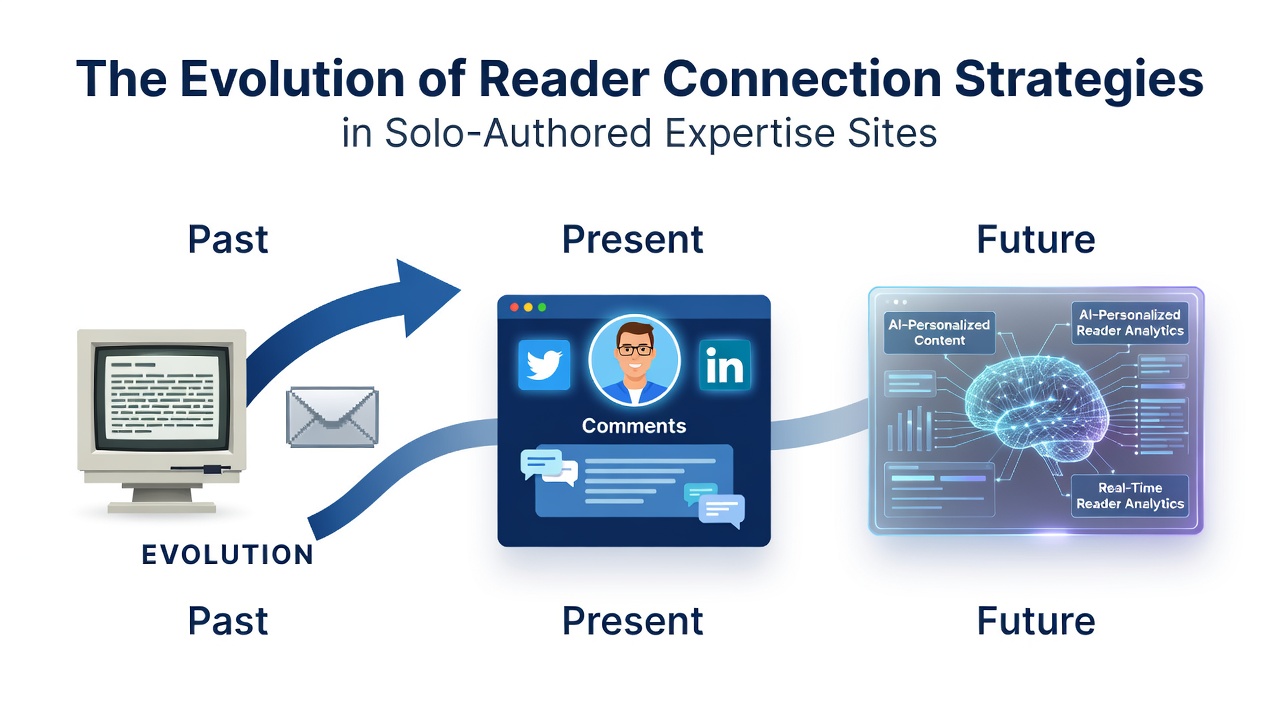
The Evolution of Reader Connection Strategies in Solo-Authored Expertise Sites
Reader connection strategies on solo-authored expertise sites have shifted through distinct phases since the mid-1990s, driven by changes in web technology, data tools, and audience expectations. These sites, operated by individual subject matter experts, initially relied on basic comment systems and static email sign-ups to build direct relationships with visitors seeking specialized knowledge in fields such as technology, health, and finance.
Initial Methods in the Web's Formative Years
Early solo-authored sites used simple HTML forms and mailing lists to maintain contact, because search engines provided limited discovery options and social platforms did not yet exist at scale. Observers note that these methods allowed authors to send periodic updates while readers responded through threaded discussions, which created archives of questions and clarifications visible to subsequent visitors. Data from that period shows comment volumes often determined an article's perceived value, since engagement metrics directly influenced how long users stayed on a page.
By the early 2000s, RSS feeds became standard on many expertise sites, enabling readers to receive automatic notifications without providing personal email addresses. Researchers tracking adoption rates found that feed subscriptions grew steadily as browsers integrated native support, reducing friction for repeat visits while preserving author control over content distribution.
Expansion Through Newsletters and Early Social Channels
Newsletters gained prominence around 2008 as standalone platforms offered reliable delivery and basic segmentation. Solo authors began collecting addresses in exchange for free resources such as checklists or case summaries, which produced measurable open rates that authors could compare against industry benchmarks published by email service providers. At the same time, emerging social networks allowed cross-posting of excerpts, though full articles remained on the original domain to maintain ownership of the primary reader relationship.
Studies conducted by academic institutions in North America documented how these dual channels increased return visits, with email subscribers showing higher click-through rates than social referrals alone. Authors who tracked these patterns adjusted posting schedules to align with peak open times identified through platform analytics.
Data-Driven Personalization and Community Features
After 2015, analytics integrations became routine, permitting authors to segment audiences by topic interest and reading history. This capability supported targeted follow-up content that addressed specific gaps identified in reader behavior logs. European research reports from that era indicated rising use of such segmentation among independent publishers, correlating with longer session durations on sites that implemented it.
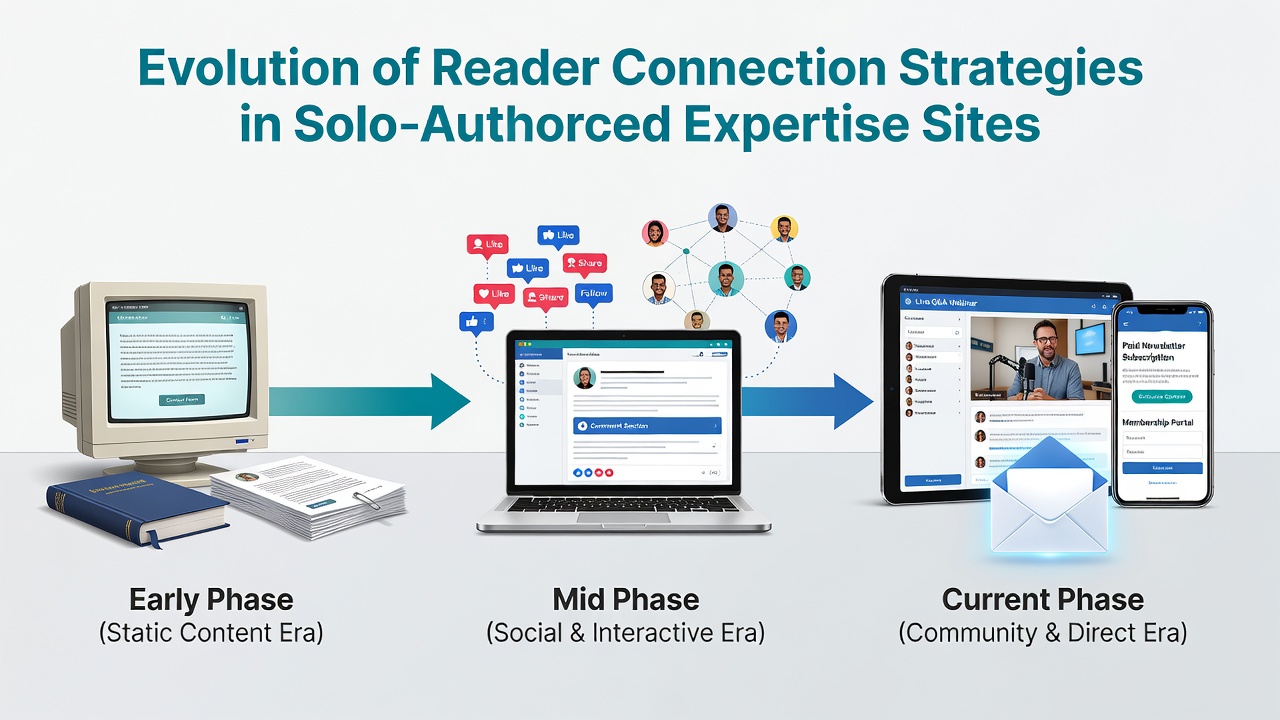
Community sections hosted directly on sites, rather than outsourced to third-party forums, emerged as another development. These areas let readers contribute case examples or corrections under moderated conditions, which authors then incorporated into updated articles. Figures released by Statistics Canada in 2023 highlighted growth in such hybrid content models among Canadian independent operators, showing measurable increases in time-on-site metrics.
Recent Developments and Integration of Interactive Elements
Since 2020, many solo-authored expertise sites added embedded polls, quizzes, and progress trackers that generate immediate feedback while collecting anonymized preference data. These tools operate alongside traditional newsletters, creating multiple touchpoints without requiring constant new article production. According to reports from the Australian Bureau of Statistics, adoption of interactive features among independent web publishers rose notably between 2021 and 2024, coinciding with improved mobile optimization standards.
By September 2026, several platforms serving solo authors plan to release updated compliance modules addressing data privacy rules across multiple jurisdictions, which will affect how connection data is stored and used. Authors monitoring these releases expect adjustments in signup flows to maintain reader trust while complying with evolving standards.
Conclusion
The progression of reader connection strategies on solo-authored expertise sites reflects ongoing adaptation to available tools and measurable audience responses. From basic mailing lists through segmented newsletters and interactive features, each stage has built upon prior methods while preserving the central role of the individual author in content curation and direct communication. Ongoing platform updates scheduled for late 2026 will likely introduce further refinements to data handling practices that influence these established patterns.